
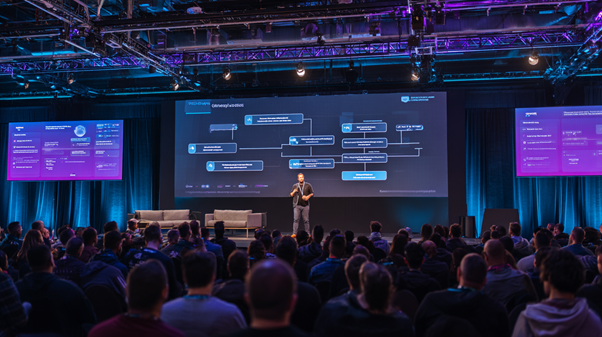
Spring 2026 iGaming events delivered clear direction for casino software teams: next-generation platforms must support rapid feature delivery, strict regulatory compliance, and continuous updates without downtime. The recurring solution across panels at Prague Gaming & TECH Summit, SBC Summit Malta, and NEXT.io was stream-based development — enabling parallel work on independent code streams while maintaining a single source of truth.
Why Traditional Branching Falls Short for Casino Platforms
Casino platforms combine high-stakes components: RNG engines, wallet systems, payment gateways, bonus engines, and real-time reporting. In traditional Git-based workflows, long-lived feature branches create merge hell, delayed releases, and compliance risks. A single delayed integration can block an entire quarterly update.
Speakers at spring conferences repeatedly highlighted the cost of this approach. When multiple teams develop new game mechanics, responsible gaming tools, and payment integrations simultaneously, linear branching slows velocity and increases regression bugs. Stream-based development solves this by allowing developers to work in isolated streams that merge back cleanly and predictably.
Core Advantages of Stream-Based Architecture in 2026 iGaming
Stream-based systems treat development as concurrent flows rather than sequential branches. Each stream represents a logical component — for example, one for sportsbook integration, another for responsible gaming features, and a third for new slot mechanics.
This model delivers three immediate benefits for casino operators: faster time-to-market, lower compliance risk, and better scalability. Developers returning from Prague Gaming & TECH Summit noted that platforms using stream-based workflows reduced integration conflicts by up to 60% compared to traditional branching.
Operators are already translating these architectural insights into real player-facing improvements. When the bonus engine is developed in a dedicated stream, teams can rapidly implement and test new promotional mechanics without affecting core systems. This approach allows online casinos to launch attractive player offers much faster and more safely. A good example is the variety of no-deposit bonuses currently available to players in Poland, which you can explore in detail at https://pl.polskiesloty.com/bonus-bez-depozytu/ – such flexibility in updating promotional features gives operators a clear competitive edge in player acquisition and retention.
Real-World Implementation Insights from Conference Discussions
Panels emphasized practical patterns for casino environments. Start by mapping your platform into logical streams: core engine, player account services, game integration layer, compliance and reporting, and frontend experiences.
Use a central repository as the single source of truth. Developers work in private or shared streams, perform changes, and promote stable versions forward. This eliminates “it works on my branch” problems that plague large casino releases.
Conference speakers also stressed integration with modern tooling. Combine streams with event-driven architectures (Kafka-style) for real-time data flow between wallet, game, and analytics modules. This setup supports the low-latency demands of live dealer games and instant withdrawals.
For teams already using AccuRev-style stream-based collaboration, the transition feels natural. The model directly addresses the pain points discussed at SBC Summit Malta: frequent regulatory audits, rapid game content additions, and the need for zero-downtime deployments.
Addressing 2026 Compliance and Security Requirements
Responsible gaming and anti-money laundering features dominated multiple sessions. Stream-based development shines here because compliance updates can be developed and audited in isolation before promotion to production streams.
For example, a new self-exclusion API or enhanced transaction monitoring rule can live in its own stream, undergo rigorous testing and regulatory review, then merge forward without touching game logic or payment flows. This reduces audit timelines and minimizes the blast radius of any required changes.
Security talks further reinforced the value. Isolated streams make it easier to apply security patches or rotate encryption keys in specific modules without triggering full regression cycles across the platform.
Actionable Steps for Casino Development Teams
Teams planning architecture updates should:
- Audit current branching strategy and identify frequent merge conflicts.
- Pilot stream-based workflows on one high-impact module (e.g., bonus engine or payment integration).
- Define clear promotion policies between streams to maintain stability.
- Integrate automated testing and compliance checks at every stream promotion point.
- Train developers on stream concepts — the learning curve is shorter than expected for teams familiar with advanced SCM tools.
Resources like dev.events help track upcoming technical conferences where similar architecture patterns are discussed in depth.
Experienced speakers at spring events also recommended reviewing real conference decks shared on Speaker Deck to see how other platforms visualize their stream-based pipelines.
The Competitive Edge for Forward-Looking Operators
Platforms built on stream-based development ship features faster, respond to regulatory shifts more confidently, and maintain higher code quality under pressure. In a market where player expectations for new games, seamless payments, and responsible gaming tools rise every quarter, this velocity becomes a decisive advantage.
The message from Spring 2026 conferences was consistent: the future of casino platform architecture is concurrent, modular, and stream-driven. Teams that adopt this approach now will spend less time fighting their tools and more time delivering the innovative experiences players demand.